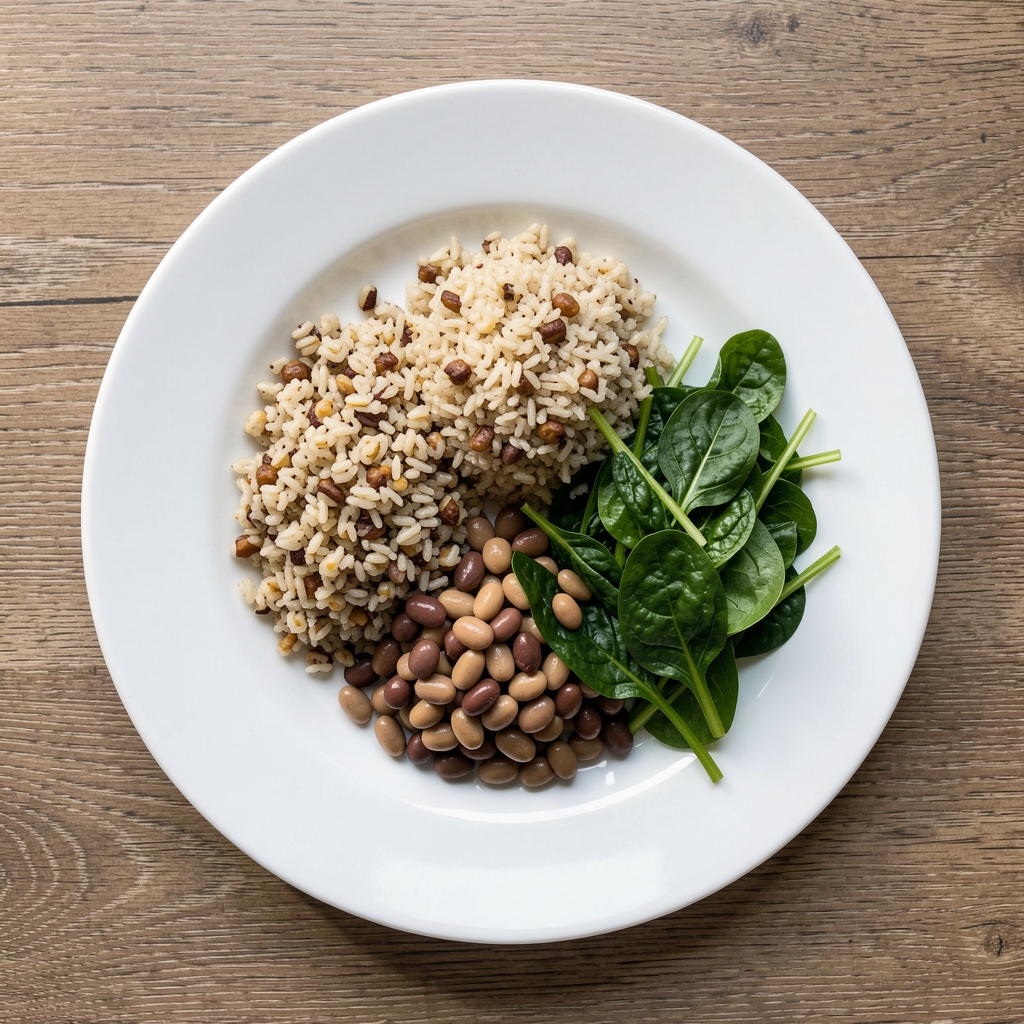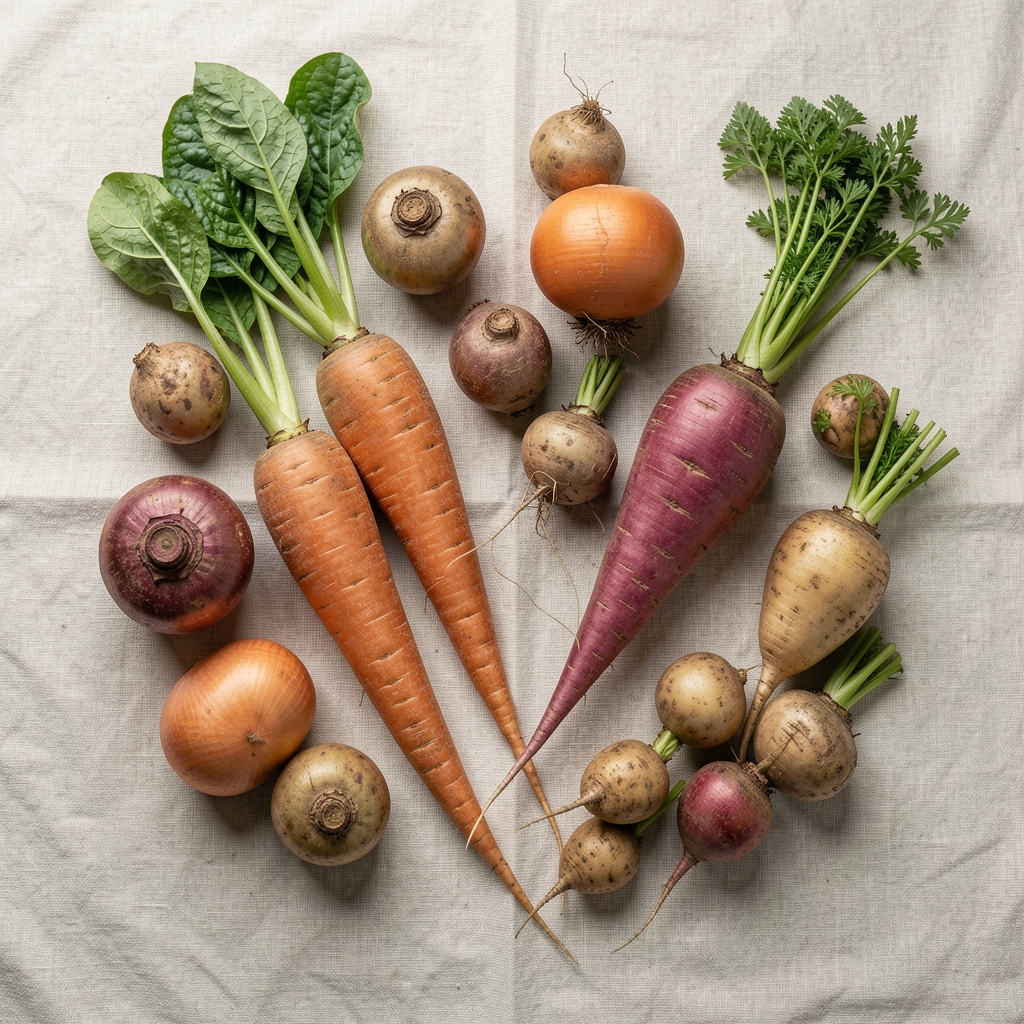
Seasonal produce shapes the weekly plate in ways that are easy to overlook. The shift from autumn squash to January's roots, and then to the thin-stalked greens of early spring, is not merely a matter of flavour or availability — it is a reconfiguration of the nutritional profile of the everyday diet. A nutritionist observing this cycle across a full year notices patterns in variety, fibre intake, and natural caloric density that no single weekly plan could replicate or replace.
The English Winter Plate
In England, the winter months present a relatively narrow range of readily available fresh vegetables. The market stalls and supermarket shelves from December through February are dominated by root vegetables — parsnips, carrots, swede, celeriac, beetroot — alongside leeks, kale, Brussels sprouts, and the occasional cavolo nero. This is not a poverty of choice; it is, from a nutritional standpoint, a concentrated offering of dense, fibre-rich, slow-digesting foods that carry advantages in the context of cold-season energy requirements.
Root vegetables are characterised by their relatively high carbohydrate content alongside meaningful quantities of dietary fibre and micronutrients including folate, vitamin C, and various B vitamins depending on the specific variety. They contribute to a sense of fullness between meals and support a steady energy rhythm across the day — a quality that becomes particularly relevant in the context of weight awareness during seasons when activity levels may be lower and appetite somewhat elevated.
The nutritionist's winter record tends to note the same observation year after year: readers who engage actively with what is seasonally available in their local market eat a more varied diet over the course of the year than those who rely exclusively on supermarket produce, where the seasonal signal is largely removed. The variety of the full year is healthful in ways that the variety of any single week can only approximate.
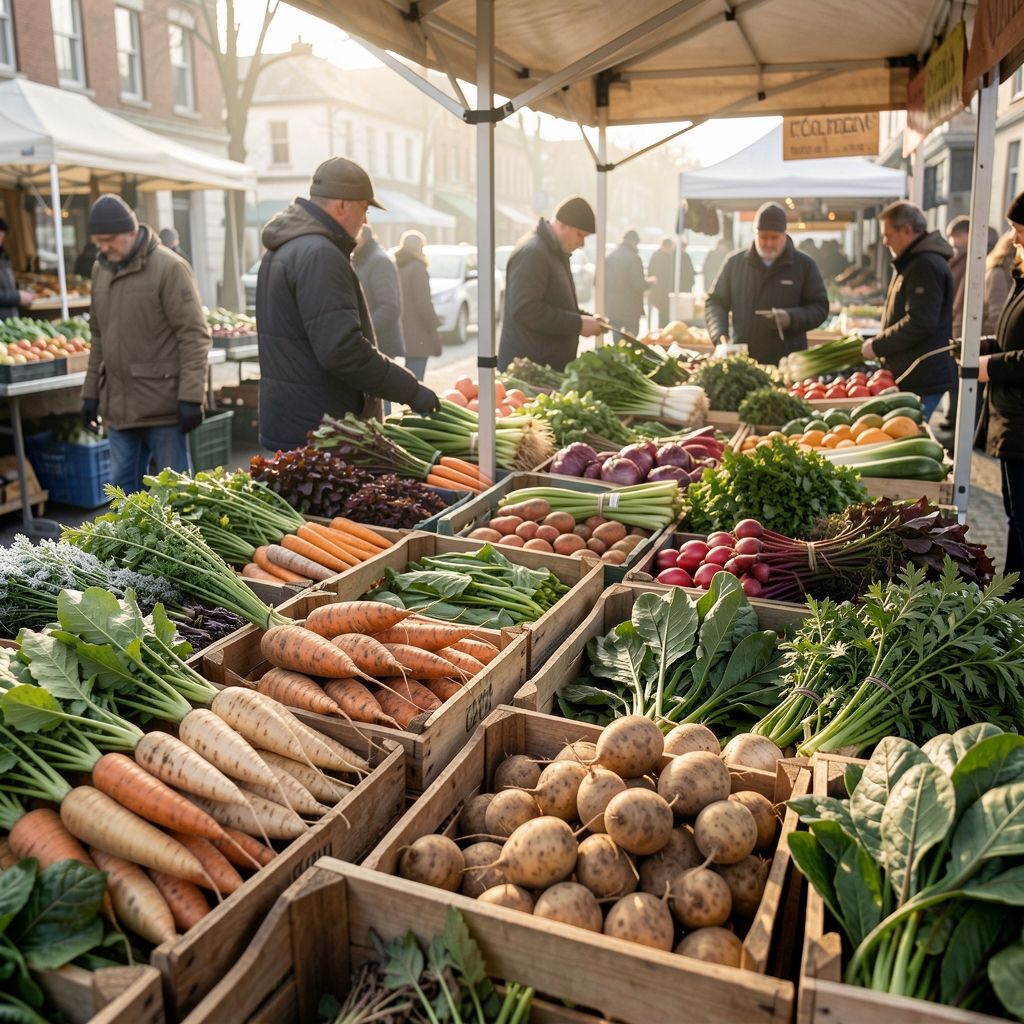
Seasonal produce at a London market, February 2026 — the winter root selection
The Transition to Spring: What the Plate Reveals
The arrival of spring produce in England — typically from March onwards — introduces a shift that is nutritionally significant. Spring greens, purple sprouting broccoli, watercress, sorrel, spinach, and later asparagus replace the root-heavy winter palette with a category of foods characterised by higher water content, lower caloric density, and distinctive micronutrient profiles. The appearance of fresh peas and broad beans in late spring adds a plant-based protein dimension that is largely absent from the winter plate.
From the perspective of weight and nutrition, this seasonal transition is worth noting. Lower-caloric-density foods — those with a high water and fibre content relative to their caloric contribution — tend to support satiety at a lower caloric intake. The spring plate, naturally, tends to be lighter in calories without requiring deliberate restriction. This is one of the more elegant observations available to any nutritionist who tracks seasonal eating: the diet regulates itself to some degree through the natural properties of what is available.
Observing this transition closely over several years, the pattern becomes legible: body weight responses tend to soften in the spring not because of intentional intervention but because the available food changes. This is not a universal rule — individual habits, cooking choices, and the influence of processed foods can override the seasonal signal entirely — but it is a consistent enough pattern to merit editorial attention.
"The diet that follows what is seasonally available tends to vary itself across the year in ways that no fixed plan can replicate. There is an intelligence in seasonal eating that operates beneath the level of conscious choice." — Tobias Ashcroft, Elgon Press
Fruit Intake Across the Year
The English seasonal fruit calendar is considerably more compressed than the vegetable calendar. Soft fruits — strawberries, raspberries, blackcurrants — appear briefly in summer; apples and pears persist into autumn and early winter from storage; and the winter months are predominantly served by imported citrus. The nutritional implication is that fruit intake in England, when restricted to domestic seasonal availability, is naturally episodic and variety-limited.
This is not problematic in itself — the nutritional virtues of fruit are valuable but not irreplaceable, and vegetables contribute comparable fibre and micronutrient value — but it is worth noting in the context of the "five portions a day" framework that is commonly referenced in English nutritional guidance. The balance between vegetable and fruit portions shifts considerably across the seasons, and a reader who tracks their intake carefully through the year will observe that the summer months typically show higher fruit variety and volume, while the winter months require more deliberate attention to ensuring adequate vegetable diversity.
The nutritionist's record on fruit intake tends to emphasise not the specific fruit consumed but the consistency of the habit. A daily piece of fruit — whatever is seasonally available — contributes more to the yearly nutritional pattern than an abundance of fruit consumed during a seasonal peak followed by months of negligible intake.

Plant-Based Meals and Seasonal Weight Balance
One of the more practical observations from the seasonal nutrition record is the ease with which plant-based meals become the default during certain seasons. In winter, a slow-cooked pot of lentils with roasted roots is both economical and seasonally coherent. In spring, a salad of watercress, fennel, and broad beans requires minimal preparation and is nutritionally dense. In neither case does plant-based eating require special intention — it is simply the natural path of least resistance when working with what is available.
The nutritional research on plant-centred diets and weight outcomes is relatively consistent in its direction: diets with a higher proportion of vegetables, legumes, and whole grains as caloric foundation tend to support weight stability over time. This is attributed to the combined effect of dietary fibre (which supports satiety), lower energy density (which limits the potential for unintentional caloric excess), and the micronutrient diversity that varied plant foods provide.
For the practical reader, the seasonal lens is a useful one. Rather than adopting a fixed dietary framework — which requires sustained will and can feel contrived — following the seasonal availability of local produce naturally shifts the weekly plate towards more plant-centred eating during the months when plant foods are most abundantly available. The shift is structural rather than effortful.
Keeping a Seasonal Food Record
The nutritionist's seasonal record is a simple instrument. It does not require calorie counting, macronutrient tracking, or the use of any application. What it requires is a weekly notation of which vegetables and fruits appeared on the plate — and, over time, how that changes as the season progresses.
Reviewing six months of such a record tends to produce the same experience in most readers: a recognition that the winter plate was narrower than it felt, that certain vegetables appeared almost every week while others were barely present, and that the spring transition brought changes that were perceptible in energy and satiety that had not been consciously attributed to the diet. The record makes the invisible visible — and that, consistently, is what precedes a more deliberate relationship with seasonal eating.
Elgon Press maintains its own seasonal produce record, drawn from observations in English markets across the calendar year. The editorial team cross-references this record against published nutritional research on the specific varieties available each season, contributing to the evidence-informed perspective that underpins each article we publish.
Seasonal Observations — Summary
- — Winter produce in England is root-dominated: fibre-rich, slow-digesting, and supportive of a steady energy rhythm.
- — Spring greens and early-season vegetables introduce lower-caloric-density foods that support satiety without deliberate restriction.
- — Fruit intake in England is naturally episodic; consistency of the fruit-eating habit across the year matters more than volume during seasonal peaks.
- — Seasonal availability naturally shifts the weekly plate towards plant-centred eating during periods of peak vegetable diversity.
- — A simple weekly seasonal food record, maintained over six months, tends to reveal patterns of narrow variety and seasonal drift that support more deliberate eating choices.
Articles published on Elgon Press are editorial in nature and reflect the writers' observations on everyday nutrition practices and weight awareness. The content is not intended as professional advice, nor as guidance for the management of any specific condition. Readers with specific concerns about their daily routines are encouraged to speak with a qualified wellness professional.